 Hawaii Photoshoot
Planning a Proposal Photoshoot in Hawaii
A Hawaii proposal photoshoot is a logistics problem wearing a romantic hat. The photographs are the easy part; the hard part is getting one person to a specific patch of sand at a specific minute without explaining why, while a photographer stands somewhere they will not be noticed. This page covers how that is actually arranged, which listings on the Hawaii photoshoot catalog can and cannot take a proposal booking, the beaches whose geography helps you, and the timing that decides whether it works.
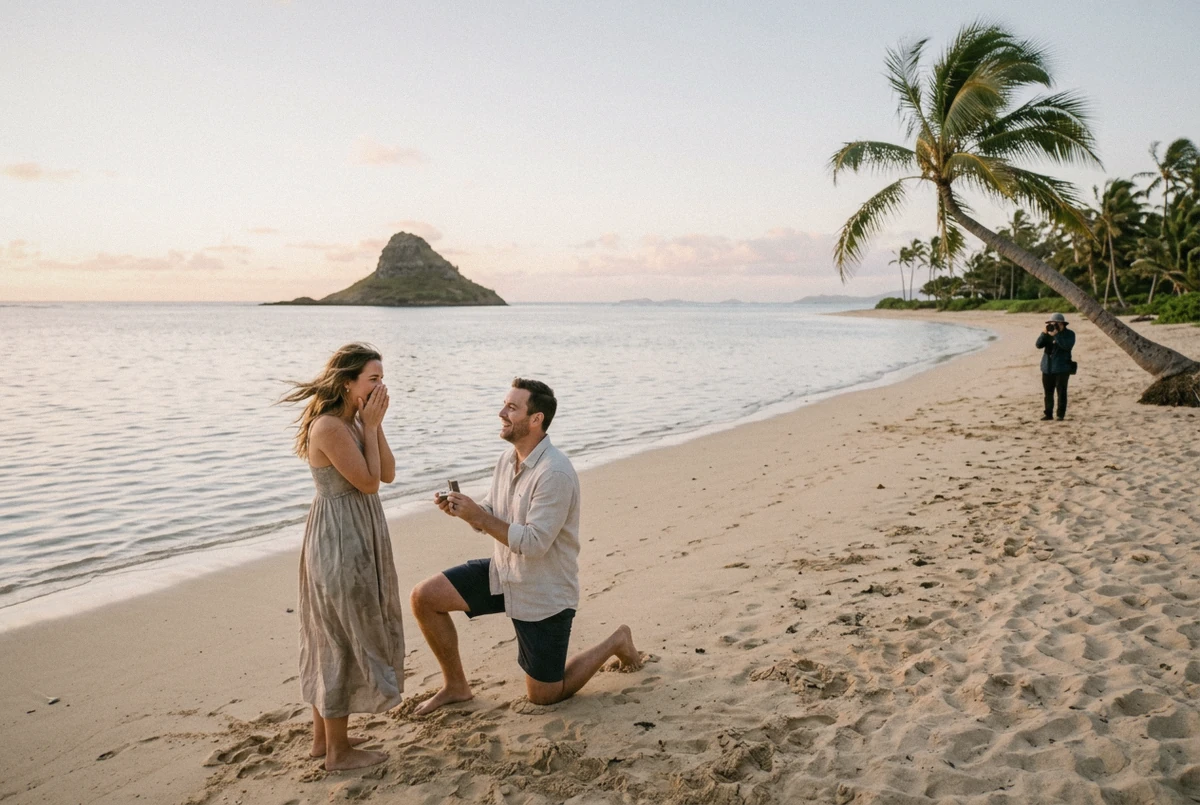
The photographer is in the frame's blind spot: far back, long lens, already in position before you arrive.
Quick answer
Book a photographer who knows it is a proposal, agree an exact minute and a landmark you can walk to naturally, and let them be in position before you arrive. Sunrise beats sunset for privacy, because the same beach that holds forty people at 18:45 holds four at 06:15. One important detail from our catalog: the concierge listing states outright that proposal photography is not included with that package, so do not book it and hope.
Key takeaways
- The photographer needs a fixed time, a fixed spot and a signal, not a rough plan
- Sunrise is emptier, cooler and cheaper to schedule around than sunset
- Say yes to a short session afterwards: the reaction frames are worth more than the kneel
- Permits still apply, and one listing covers them in the price
How the Surprise Is Actually Arranged
The three things the photographer needs from you
A precise time, a precise place and a recognisable signal. Precise means 06:20 at the third palm past the beach access, not sunrise at Lanikai. Photographers working proposals arrive twenty minutes early, find an angle with cover, and wait; if you are ten minutes late they are still waiting, and if you walk in from the wrong direction they may be shooting the back of your head.
The signal is whatever tells them you are about to kneel. Taking off a hat, moving a bag to the other shoulder, stopping and turning to face the water. Agree it in writing and then do it deliberately.
Cover story, and who else knows
The usual working fiction is a sunrise walk, a coffee on the beach, or a scheduled couples session that the other person believes is the whole plan. That last one is the most reliable, because it explains a photographer being present at all, and it removes the risk of somebody spotting a stranger with a long lens and mentioning it.
If other family members are travelling with you, tell as few of them as possible. Every proposal that gets ruined is ruined by a person, never by a photographer.
The kneel is thirty seconds; book the hour anyway
The frames people keep are almost never the kneel itself. They are the ten minutes afterwards: the hands, the ring, the phone call to a parent, the walking away laughing. Every photographer who works proposals says the same thing, and the sessions in our catalog that run 30 to 60 minutes are built for exactly that shape.
If you are picking a length, take the hour. Half an hour is enough for the moment and not enough for the aftermath.
Which Listings Can Take a Proposal
We checked all twelve. The relevant differences are the exclusion, the group allowance and how the location gets agreed.
| Listing | Proposal-friendly | Why |
|---|---|---|
| Island-wide Oahu session | Yes | You name the beach and the hour; photographer meets you there |
| Honolulu vacation session | Yes | Same format, anchored to town beaches |
| Couples and families, Oahu | Yes | Listing names surprise proposals explicitly and includes the state permit |
| Sunset session, west side | Yes | Priced for two, and the west coast has the sunset over water |
| Lahaina session, Maui | Yes | West Maui coastline, same flexible meeting point |
| Kona beach session | Yes | Driest coast in the state, priced per group |
| Concierge photoshoot | No | The listing states proposal photography is not included with this package |
| Waikiki gondola cruise | Conditional | Private boat and an evening bridge message, but photos come after you review the listing |
The one exclusion, in the operator's own words
The concierge listing's inclusions carry the line: proposal photography not included with this package. That is unusual and worth taking at face value, because a proposal is a different job with different timing and a different insurance position. If you want that company's photographers, ask them which product covers it rather than booking the general session and explaining afterwards.
The listing that says yes out loud
The couples and families session mentions surprise proposals in its own description of the pre-shoot call, alongside family shoots and weddings, and it is the only listing in the catalog that states the State of Hawaii photo permit is included in the price. For a proposal on state-managed sand, that combination is the least complicated one available.
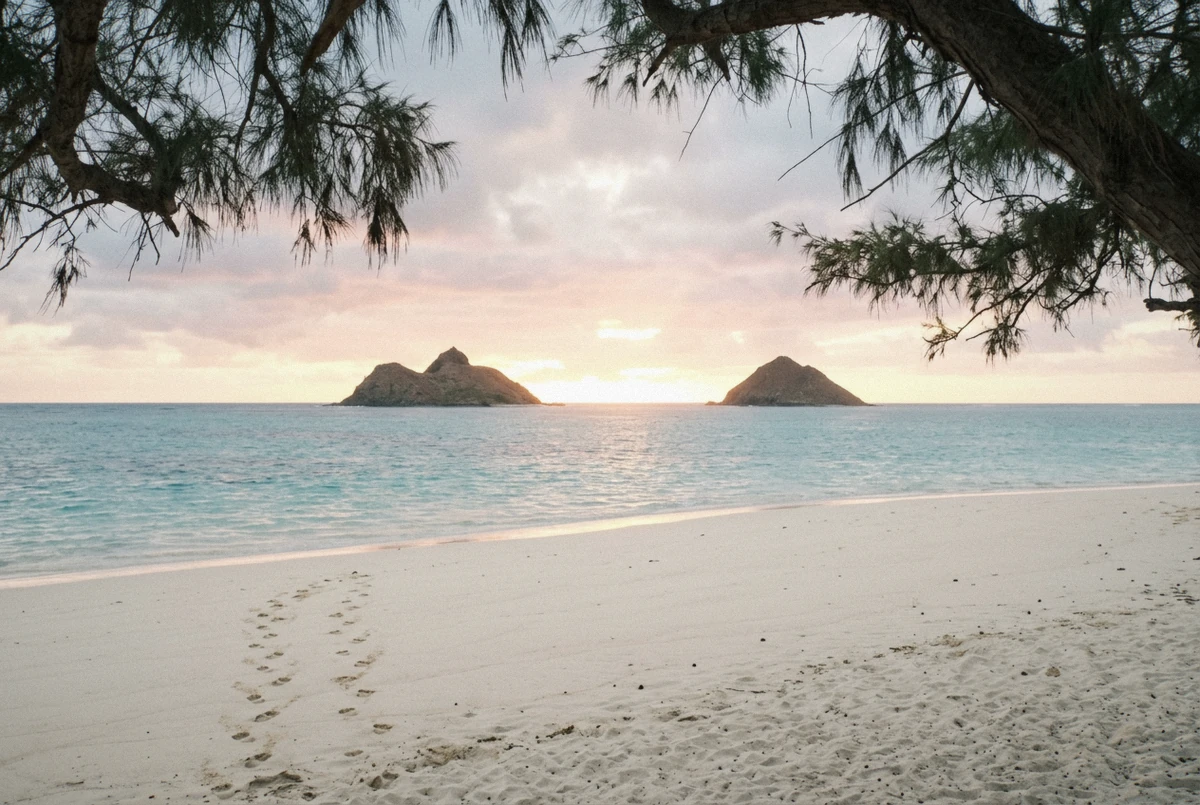
Windward sunrise: an empty beach, warm light and ironwoods to stand behind.
Beaches Whose Geography Helps You
A proposal needs three things from a location: privacy at that hour, a natural reason to be walking there, and somewhere for a photographer to stand unnoticed. Our photo spots map covers the light; this is the cover.
Windward Oahu at sunrise
Lanikai and Kailua face east, so the sun comes up out of the water behind you, and at 06:15 both are close to empty. Ironwood trees line the back of the sand at Kailua Beach Park, which gives a photographer somewhere to be. The catch is parking: Lanikai has none to speak of, and a rushed arrival is the enemy of a calm proposal.
Ko Olina at sunset
The lagoons are the only Oahu coast where the sun sets into the ocean, and their crescent shape means a photographer can work from the rocks at one horn while you stand at the other. Busier than a windward sunrise, calmer than Waikiki. The sunset specialist works this stretch and prices for two people.
West Maui and the Kona coast
Both face west, both are dry, and both have long stretches of shoreline where a couple walking is unremarkable. On Maui, the Lahaina session knows the access points; on the Big Island the Kona session covers beaches from Kailua-Kona up to Waikoloa, where the lava fields give natural cover.
Where not to do it
Central Waikiki at sunset, where the crowd makes both the privacy and the photograph impossible. Any lookout with a car park and a railing, which reads as a viewpoint rather than a moment. And anywhere that requires a hike, unless you are certain the other person would find that romantic rather than suspicious at six in the morning.
Planning Yours
If you want the emptiest possible beach
sunrise on the windward side, and the island-wide session that meets you anywhere on Oahu
If you want the sun setting into the water
the west coast, and the sunset specialist priced for two
If family are travelling with you and will appear afterwards
the group session, which covers up to fifteen people on the same booking
If you want to propose on the water
the gondola cruise can project a message under the bridge on evening departures, but read the photo condition first
If you are considering the concierge service
do not book that package for a proposal: the listing excludes it in writing
The Timing Table
Fix the minute against the actual date. These are Honolulu figures; the other islands sit within a few minutes of them.
| Month | Sunrise | Sunset | Best proposal window | Why |
|---|---|---|---|---|
| June to August | About 5:50 | About 19:15 | Sunrise | Empty beaches, and an early start beats the heat |
| September to October | About 6:10 | About 18:30 | Either | Shoulder months, fewer people at both ends |
| November to January | About 7:00 | About 17:55 | Sunset | A 7am sunrise is civilised, but sunset is warmer |
| February to May | About 6:30 | About 18:50 | Sunrise | Dry season building, calm windward mornings |
Give yourself a twenty-minute margin
Arrive early enough that the walk is unhurried, because a proposal that starts with a jog across a car park photographs exactly like a proposal that started with a jog. Photographers working these bookings are in position twenty minutes before the agreed time, which is the standard you should match.
The other reason for margin is light. In the twenty minutes after sunrise the colour changes noticeably every few minutes, and a plan built on the exact moment of sunrise leaves nothing if you are five minutes late.
What happens if somebody else is on your patch of sand
Occasionally there is a jogger, a fisherman or another couple exactly where you planned to stand. Photographers deal with this by moving the composition rather than the moment: a few metres along the beach, a lower angle that puts the ocean behind you, or a tighter frame. It is worth knowing in advance so that seeing a stranger at 06:15 does not derail the plan in your head.
Timing, Weather and the Things That Go Wrong
Sunrise times move by more than an hour across the year
Honolulu sunrise runs from about 5:50 in June to just after 7:00 in December, and sunset from about 19:15 to 17:55. Fix your minute against the actual date rather than a general idea of morning, because being twenty minutes early in December means standing in the dark, and twenty minutes late in June means the light has gone flat.
Rain, and the one thing you cannot reschedule
Every listing here cancels free up to 24 hours ahead, which covers a forecast that turns early. What it does not cover is the morning itself: if it rains at 06:00 on the day you planned, you are proposing in the rain or not proposing. Hawaiian rain arrives in short bands and often passes within twenty minutes, so the practical answer is to build a spare morning into the trip and tell the photographer it exists.
Permits, briefly
A hired photographer working state land needs an Open and Accessible ePermit or a Standard Film Permit, with a $100 per day fee at Division of State Parks sites. It is their paperwork, not yours, and it is one more reason the listing that includes the permit in the price is the simplest booking for a moment you cannot repeat. The permit rules are set out in full on their own page.
Afterwards
Ask for a handful of frames sent quickly if you plan to tell people the same day; the couples and families listing shows photos about half an hour after the session, while most galleries take four to five working days and one takes two weeks. Whichever you book, the delivery times are worth knowing before you promise anybody a photograph.
Hawaii Proposal Photoshoot Questions
How much does a proposal photoshoot cost in Hawaii?
The same as any private session, since almost all of them will take a proposal booking: from $161 for 30 minutes per person on Oahu, $397 for a group of up to fifteen, or $450 for a west-coast sunset session covering two. The cost breakdown sets out what each includes.
Is proposing in Hawaii a good idea?
The light and the beaches make it easy to photograph well, which is a real advantage. The practical caveats are crowds at the obvious spots, sunrise times that shift by more than an hour across the year, and rain that arrives without much notice. All three are solved by choosing a windward sunrise and building a spare morning into the trip.
How does the photographer stay hidden?
Distance and a long lens. They arrive early, find cover, and shoot from far enough back that you never see them until you look. Your job is to arrive at the agreed minute, at the agreed spot, and to give the agreed signal.
Where can I take engagement pictures in Hawaii?
The same places that suit proposals: windward Oahu at sunrise, the Ko Olina lagoons at sunset, west Maui and the Kona coast. Our photo spots map lists which coast faces which way and what hour each one works.
Can we do a full session straight afterwards?
Yes, and it is the standard arrangement. The proposal takes a minute; the session that follows is where the photographs of the two of you come from. Book the hour rather than the half hour so there is room for it.
Do any listings refuse proposals?
One does. The concierge photoshoot states in its inclusions that proposal photography is not included with that package. Every other portrait session in the catalog will take the booking, and one names surprise proposals in its own pre-shoot description.